
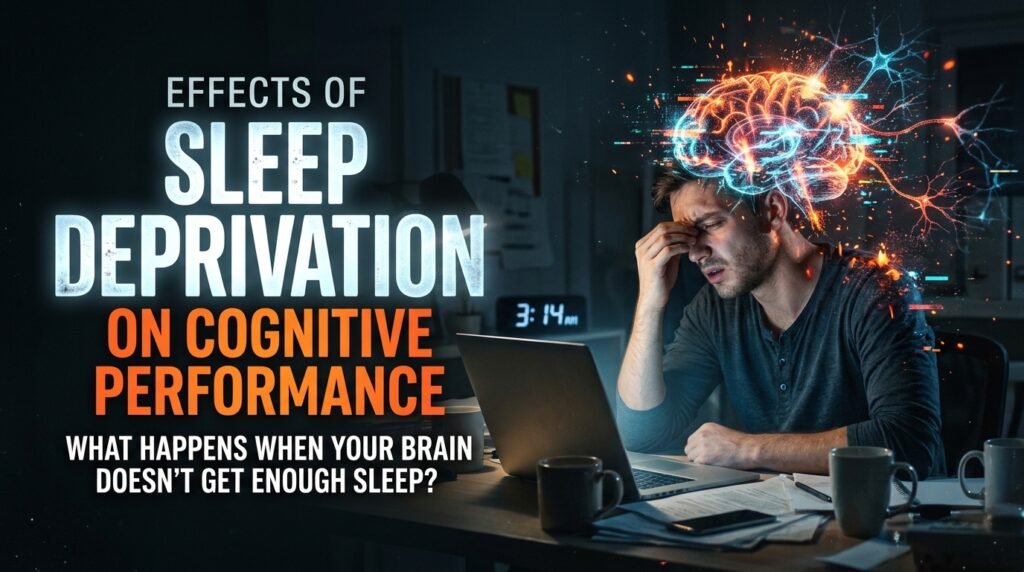
Ever feel like your brain is running on low battery? You reread the same sentence three times, forget why you walked into a room, or struggle to concentrate on a task that normally feels effortless. These experiences may be more than everyday distractions. They can be signs that you aren’t getting enough quality sleep.
The effects of sleep deprivation on cognitive performance can influence nearly every part of your day, from memory and focus to problem-solving, reaction time, and emotional control. Even losing a little sleep repeatedly can make it harder to think clearly, learn efficiently, and perform at your best. Research shows that sleep restriction can negatively affect several areas of cognitive functioning, particularly sustained attention, executive functioning, and memory. Source: PubMed research review
At PurWell, we believe wellness starts with taking care of the basics—and quality sleep is one of them. Let’s explore what sleep deprivation does to your brain, why it matters, and how you can build a healthier nighttime routine to battle the Effects of Sleep Deprivation on Cognitive Performance.
What Is Sleep Deprivation?
Sleep deprivation occurs when you consistently get less sleep than your body needs or experience sleep that is too disrupted to leave you feeling rested. It can happen after one sleepless night, but it also develops gradually when you repeatedly cut your sleep short.
Common causes include:
- Staying up late to work, study, or scroll on your phone.
- Stress, anxiety, or racing thoughts at bedtime.
- Irregular work schedules or frequent travel.
- Caffeine too late in the day.
- Environmental disruptions, including noise and light.
- Sleep problems such as insomnia or sleep apnea.
Adults generally need seven to nine hours of sleep per night, although individual needs vary. Getting enough hours matters, but sleep quality and consistency matter, too. Source: National Heart, Lung, and Blood Institute
7 Major Effects of Sleep Deprivation on Cognitive Performance
Your brain does important work while you sleep, helping support learning, memory, attention, and emotional regulation. When sleep is insufficient, those processes can become less effective.
1. Reduced Focus and Attention
One of the most noticeable effects of sleep deprivation is difficulty maintaining attention.
You might find yourself:
- Getting distracted more easily.
- Losing your place while reading.
- Making careless mistakes at work.
- Struggling to follow conversations.
- Having difficulty staying alert during meetings or classes.
Sleep loss can make attention less consistent. You might feel focused for several minutes, then suddenly miss an important detail. This is particularly concerning during activities that require sustained concentration, such as driving, operating machinery, or performing safety-critical work.
The takeaway: If you regularly struggle to stay focused, consider whether your sleep habits could be contributing to the problem.
2. Weaker Memory and Learning
Sleep plays an important role in learning and memory. Your brain needs adequate rest to process new information and help stabilize memories.
When you’re sleep-deprived, you may have trouble absorbing information in the first place. You might also find it harder to recall details later.
This can affect:
- Students preparing for exams.
- Professionals learning new skills.
- People trying to remember instructions.
- Anyone attempting to retain information from books, meetings, or conversations.
Research reviews have found that sleep deprivation can affect both working memory—the information you hold in mind temporarily—and long-term memory processes. Source: The sleep-deprived human brain
Pulling an all-nighter to study may seem productive, but sacrificing sleep can undermine the very learning you’re trying to improve. One of the unsuspecting Effects of Sleep Deprivation on Cognitive Performance.
3. Slower Reaction Time
Sleep deprivation doesn’t just make you feel tired. It can slow how quickly you notice information and respond to it.
That delay may seem minor, but small lapses can have serious consequences when timing matters.
Examples include:
- Reacting more slowly to changing traffic conditions.
- Taking longer to respond to questions.
- Missing a notification or warning.
- Making more errors during repetitive tasks.
The National Heart, Lung, and Blood Institute notes that sleep deficiency can slow reaction time and increase mistakes, thus adding to the Effects of Sleep Deprivation on Cognitive Performance. Read the research
Important: Caffeine or a quick energy boost cannot reliably make severe sleep deprivation safe. If you’re struggling to stay awake, avoid driving and other potentially dangerous activities.
4. Impaired Decision-Making and Problem-Solving
Ever notice that everything feels more complicated when you’re exhausted?
Sleep deprivation can make it harder to evaluate information, compare options, adapt to changing circumstances, and solve problems efficiently.
You may find yourself:
- Making decisions without considering all the facts.
- Having trouble thinking through complex problems.
- Becoming less flexible when plans change.
- Overlooking potential risks.
- Taking longer to complete demanding mental tasks.
The effects aren’t identical for everyone or every task, but research consistently links insufficient sleep with impaired performance across several cognitive domains. Source: PubMed meta-analysis
For business owners, students, parents, and busy professionals, protecting sleep can be a practical part of protecting everyday performance and a serious way to control the Effects of Sleep Deprivation on Cognitive Performance.
5. Reduced Mental Clarity and Working Memory
Working memory is your brain’s temporary mental workspace. It helps you hold information in mind while using it.
For example, working memory allows you to remember a phone number long enough to dial it, follow multiple steps in a recipe, or mentally compare prices while shopping.
When sleep-deprived, you may struggle to juggle several pieces of information at once. You might forget the first part of an instruction before hearing the last, or lose track of what you were doing after an interruption.
This can feel like brain fog, although brain fog has many possible causes beyond poor sleep.
A better nighttime routine may help support clearer thinking by giving your brain a more consistent opportunity to rest.
6. Mood Changes and Reduced Emotional Control
Cognitive performance isn’t just about intelligence or memory. Your emotional state can influence how you think, communicate, and respond to everyday challenges.
Too little sleep may leave you feeling:
- Irritable or impatient.
- More easily overwhelmed.
- Less motivated.
- More sensitive to stress.
- Less able to manage frustration.
When you’re exhausted, a minor inconvenience can feel like a major problem. Conversations may become more difficult, and routine decisions can require extra effort. These are Effects of Sleep Deprivation on Cognitive Performance.
Sleep supports brain functions involved in emotion and behavior, so prioritizing rest can be an important part of a broader wellness routine. Persistent mood changes, however, deserve attention in their own right and shouldn’t automatically be attributed to sleep loss alone.
7. Lower Productivity and Increased Mistakes
When focus, memory, reaction time, and problem-solving all take a hit, productivity often suffers.
Tasks that normally take 20 minutes may take 40. You might need to double-check work, repeat instructions, or spend extra time correcting preventable errors.
Sleep deprivation can also create a frustrating cycle: you fall behind during the day, stay up late trying to catch up, and begin the next day even more tired.
Breaking that cycle means treating sleep as a basic need, not a reward you earn only after everything else is finished. Simple overlooked Effects of Sleep Deprivation on Cognitive Performance.
Can One Bad Night of Sleep Affect Your Brain?
Yes. Even a single night of insufficient sleep can affect attention, alertness, and reaction time the following day.
However, the severity varies based on how much sleep you lost, your usual sleep habits, your health, and the demands of the task.
Repeated sleep restriction can be particularly problematic because the effects may accumulate across several nights. You might even feel as though you’ve adapted to getting less sleep while your performance continues to suffer.
The best approach isn’t to panic over an occasional restless night. Instead, focus on returning to a consistent sleep schedule and addressing persistent problems that prevent you from getting adequate rest.
How to Improve Sleep and Support Better Cognitive Performance
You can’t always control how busy life gets, but you can create conditions that make quality sleep more likely.
1. Keep a Consistent Sleep Schedule
Try to go to bed and wake up around the same time every day, including weekends.
A consistent schedule helps reinforce your body’s sleep-wake rhythm. If your current bedtime is much later than you’d like, shift it gradually rather than trying to overhaul everything overnight.
2. Create a Relaxing Bedtime Routine
Give yourself 30–60 minutes to transition out of work mode.
Consider:
- Reading a physical book.
- Taking a warm bath or shower.
- Practicing gentle stretching.
- Listening to calming music.
- Trying a short guided meditation or breathing exercise.
The goal is to create a repeatable signal that your day is winding down.
3. Make Your Bedroom Sleep-Friendly
A comfortable sleep environment can make it easier to fall asleep and stay asleep.
Keep your bedroom cool, dark, and quiet when possible. Consider blackout curtains, an eye mask, or earplugs if your surroundings are disruptive.
If you use your phone as an alarm, try keeping it away from your bed so notifications don’t become a midnight distraction. Another simple tool to combat the Effects of Sleep Deprivation on Cognitive Performance
4. Watch Your Caffeine and Alcohol Intake
Caffeine can interfere with sleep for hours after consumption, so experiment with an earlier cutoff time if you have trouble falling asleep.
Alcohol may make you feel sleepy initially, but it can disrupt sleep quality later in the night. Avoid using it as a sleep aid.
5. Get Regular Physical Activity
Regular movement can support overall health and help some people sleep better. Walking, cycling, strength training, and other activities can all fit into a healthy routine.
Choose activity levels that work for you, and avoid intense exercise close to bedtime if you find it makes you feel more alert.
6. Address Stress Before Bed
Stress and racing thoughts can make it difficult to settle down.
Try writing tomorrow’s to-do list before bedtime, keeping a brief journal, or practicing a relaxation technique. This can help you create a boundary between planning for tomorrow and trying to sleep tonight.
If persistent anxiety or stress is interfering with sleep, consider speaking with a qualified healthcare professional.
Can Sleep Supplements Help With Better Rest?
For some adults, a sleep-support supplement may be one part of a broader nighttime routine. However, supplements aren’t a substitute for adequate sleep, and their effects depend on the ingredients, dose, individual, and reason for the sleep difficulty.
PurWell offers PurSlep sleep-support products for adults looking to build a more intentional nighttime wellness routine.
Depending on the product, PurSlep formulations include ingredients such as:
- Melatonin: A hormone involved in regulating the sleep-wake cycle.
- L-Theanine: An amino acid studied for its potential relaxation-related effects.
- Valerian root: An herbal ingredient traditionally used in sleep-related products.
- Magnesium: An essential mineral involved in many normal bodily functions.
- CBD and CBN: Cannabinoids included in certain formulations, with evidence for specific sleep benefits still developing.
Different ingredients have different levels of evidence, and results aren’t guaranteed. Supplements may also interact with medications or cause unwanted effects. Talk with a healthcare professional before using sleep supplements, especially if you take medication, have a medical condition, are pregnant or breastfeeding, or experience persistent sleep problems. Don’t combine sedating products without professional guidance, and don’t drive if a product makes you drowsy or impaired.
Now you know the Effects of Sleep Deprivation on Cognitive Performance, time to do something about it.
Ready to explore a more intentional nighttime routine? Discover PurWell’s sleep-support options and find products that fit your wellness goals.
Explore the PurWell website to learn more.
When Should You Seek Professional Help for Poor Sleep?
Occasional sleep trouble is common, but ongoing sleep deprivation deserves attention.
Consider talking with a healthcare professional if you regularly:
- Have difficulty falling asleep or staying asleep.
- Feel exhausted despite spending enough time in bed.
- Snore loudly, gasp, or experience interrupted breathing during sleep.
- Struggle to concentrate because of persistent daytime sleepiness.
- Notice that sleep problems are affecting work, relationships, mood, or daily safety.
An underlying issue, such as insomnia or sleep apnea, may require specific treatment. Getting help can be more effective than repeatedly trying new sleep products without understanding the cause.
Frequently Asked Questions About Sleep Deprivation and Cognitive Performance
What are the main effects of sleep deprivation on cognitive performance?
The main effects can include reduced attention, slower reaction time, difficulties with working memory and learning, impaired problem-solving, and changes in emotional regulation. The degree of impairment depends on the amount and pattern of sleep loss.
Does sleep deprivation affect memory?
Yes. Insufficient sleep can interfere with learning new information and processes that help stabilize memories. It may also make it harder to keep information in mind and retrieve details when needed.
How many hours of sleep do adults need for optimal cognitive performance?
Most adults should aim for seven to nine hours per night. Individual needs vary, and sleep quality and consistency also matter. Regularly getting less sleep than you need may affect alertness, memory, and concentration.
Can you reverse the cognitive effects of sleep deprivation?
Many short-term effects improve when you return to adequate, consistent sleep. Recovery may take more than one night after substantial or prolonged sleep loss. If cognitive difficulties persist despite better sleep, consult a healthcare professional.
Does sleep deprivation cause brain fog?
It can contribute to brain fog, including difficulty concentrating, forgetfulness, and reduced mental clarity. Brain fog is not a diagnosis, however, and may have other causes such as stress, medication effects, or underlying health conditions.
Can sleep supplements improve cognitive performance?
Some sleep-support ingredients may help certain people with specific sleep difficulties and Effects of Sleep Deprivation on Cognitive Performance, but they don’t directly guarantee better memory or concentration. The priority is getting sufficient, restorative sleep and addressing the reason you’re not sleeping well.
Is it better to stay up late studying or sleep before an exam?
For most people, protecting adequate sleep is a better strategy than sacrificing an entire night to study. Sleep supports learning and memory, while sleep deprivation can impair attention and recall. A consistent study schedule combined with adequate rest is a more sustainable approach.
Final Thoughts: Better Sleep, Clearer Thinking
The effects of sleep deprivation on cognitive performance can reach far beyond feeling tired. Poor sleep may make it harder to focus, remember information, solve problems, manage emotions, and perform everyday tasks safely.
The good news? Small, consistent changes can help you build a healthier foundation for rest. Start with a regular sleep schedule, a calming nighttime routine, a comfortable bedroom, and professional guidance when sleep problems persist.
At PurWell, we believe feeling your best begins with everyday wellness habits that work together. Make quality sleep a priority, explore thoughtful sleep-support options when appropriate, and give your mind the rest it needs to show up for tomorrow.
Sleep well. Think clearly. Feel more like yourself.